



Ford VIN Decoder: How to Read and Understand Your VIN Number
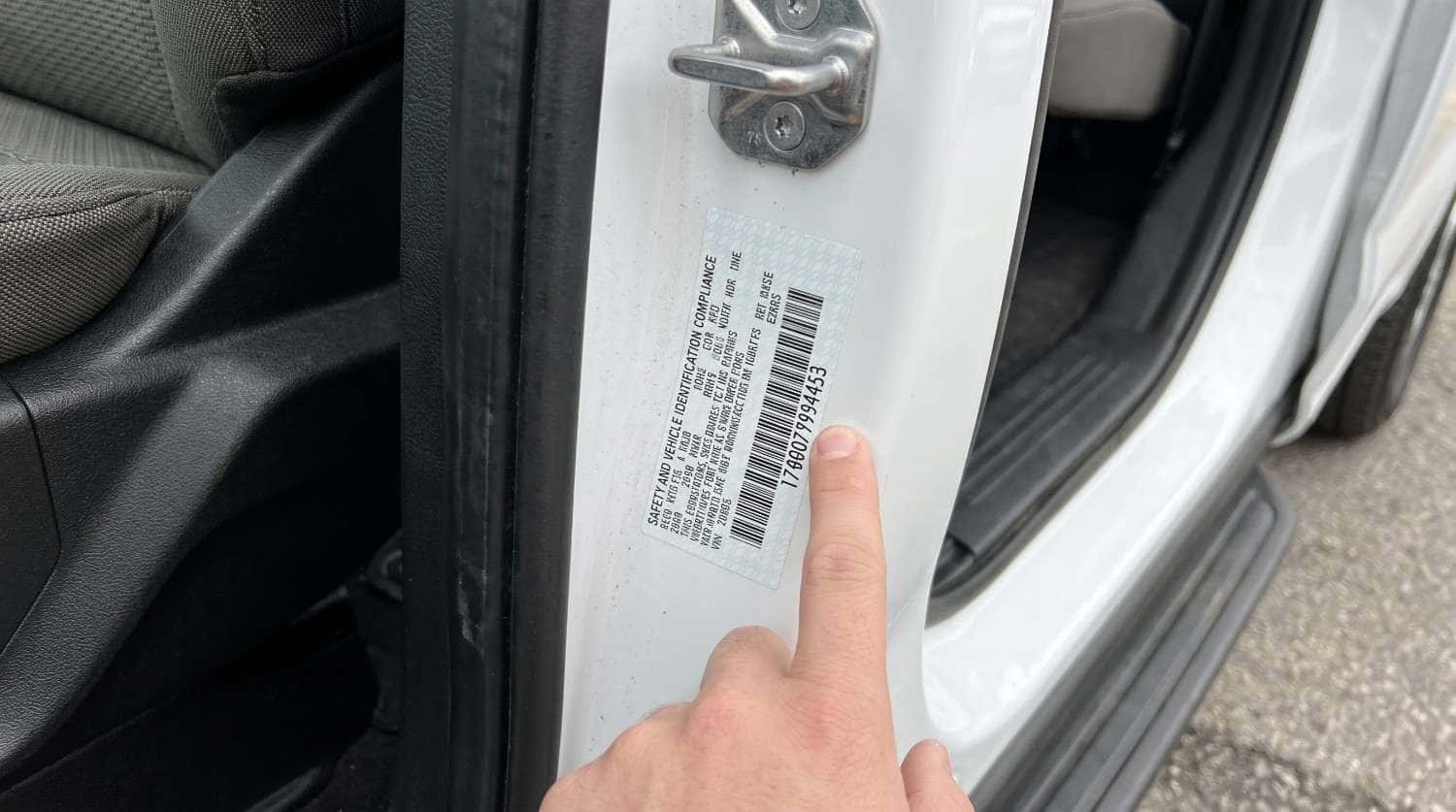
You’re squinting at the white sticker inside an F-150’s driver door, trying to figure out which brake pads to order. A good Ford VIN decoder fixes this instantly. That 17-character string isn’t just random factory noise. It’s the truck’s DNA.
Every digit tells a specific story about how that exact vehicle rolled off the line. From the engine displacement to the final assembly plant.
By reading the rest of this page, you’ll know how to break down those characters yourself. You can verify if a used 2026 Bronco actually has the factory tow package before you buy it. Or check the exact model year.
Quick Summary: How Do I Read a Ford VIN?
You read a Ford VIN by breaking the 17 characters into three sections. The first three letters tell you the manufacturer and country. Positions four through eight identify the exact engine and model type. The 10th character is the model year. The final six numbers are the serial number off the assembly line. It tells you exactly how the truck was built, not how it was driven.
Key Takeaways
- Standard VINs are exactly 17 characters.
- Look at the lower driver-side dashboard or the door sticker to locate yours.
- The first three digits make up the World Manufacturer Identifier (WMI). This shows if it’s a truck or car.
- The 2026 year character is T.
- Free lookup tools show factory build specs, but they never pull up accident reports or previous owner names.
- Reach out to the parts counter when you need a verified component match.
What Is a Ford Vehicle Identification Number?
A Ford vehicle identification number is a unique 17-character code acting as your truck’s factory fingerprint. It records exact build specs, engine size, and the assembly plant. No two vehicles share the same sequence. That makes it the absolute only way to confirm what you own.
Where to find your Ford VIN
| Location | Where exactly | Good for |
| Dashboard | Lower driver-side corner, visible through the windshield | Quick visual checks in the parking lot. |
| Door Jamb | White sticker inside the driver’s side door frame | Verifying gross vehicle weight and paint codes. |
| Paperwork | Your vehicle title, registration, or insurance card | Decoding from your couch. |
| Frame / Engine | Stamped directly on the metal (usually passenger side frame on trucks) | Confirming the chassis matches the cab. |
| FordPass App | Inside your vehicle details screen on your phone | Looking up your Ford VIN number while away from the car. |
Grab your phone and take a picture of the door sticker. Trust me. It saves you from constantly walking outside when the parts guy asks for your specs.
And always check that the dash plate matches the door jamb on a used truck. If they don’t match, run.
How to Read a Ford VIN, Character by Character
A Ford VIN has 17 characters, and each spot means something. The first three name the maker and vehicle type. The next five describe the build. The last nine cover the check digit, model year, plant and serial number.
| Position | What it tells you | Example | Notes |
| 1-3 | World Manufacturer Identifier (WMI) | 1FT | 1 is the US, F is Ford, T is truck. A Mustang starts with 1FA. |
| 4-7 | Vehicle Descriptor Section (VDS) | EW1E | Body, cab, weight rating, restraints. Codes vary by model |
| 8 | Engine code | 5 | Changes by model and year. Confirm on NHTSA vPIC |
| 9 | Check Digit | 7 | Math result of the other characters. Catches typos and fakes. |
| 10 | Model Year | T | Identifies the specific year the vehicle was built. T stands for 2026. |
| 11 | Assembly Plant | F | K is Kansas City Assembly. Dearborn uses F |
| 12-17 | Production Sequence | 123456 | Serial number assigned by that plant. |
Here’s a sample VIN, not a real vehicle: 1FTEW1E57TK123456.
- 1FT: US-built Ford truck.
- EW1E: body, cab and weight details.
- 5: engine code. Check what it means for your model year.
- 7: check digit. On this made-up VIN it’s deliberately wrong, so a decoder will flag it.
- T: 2026 model year.
- K: Kansas City Assembly.
- 123456: the plant’s serial number for that truck.
Why the check digit exists
Honestly, the ninth character is the one people trip on. It isn’t a factory equipment code at all. The National Highway Traffic Safety Administration requires it under 49 CFR Part 565 for strict fraud prevention. A computer runs a specialized mathematical formula based on the other 16 characters to prove the sequence hasn’t been faked or cloned.
Ford-Specific Codes: Plant, Engine and Model Year
The tenth character always tells you the exact model year. To prevent confusion on stamped metal plates, standardized VINs skip the letters I, O, and Q entirely across all 17 characters. Furthermore, for the 10th position specifically, the letters U and Z, along with the number zero, are never used as model year codes.
| Model Year | Position 10 character |
| 2023 | P |
| 2024 | R |
| 2025 | S |
| 2026 | T |
| 2027 | V |
The first three digits sort out where the vehicle was built and its general body class. You spot a heavy-duty truck from a passenger sedan instantly.
| Ford WMI prefix | Meaning |
| 1FA | USA Passenger Car |
| 1FT | USA Truck |
| 1FM | USA Multi-Purpose Vehicle (SUV) |
| 1FD | USA Incomplete Vehicle |
| 3FA | Mexico Passenger Car |
| 2FM | Canada Multi-Purpose Vehicle |
Position eight is your specific engine code. And position eleven marks the final assembly plant.
But here’s the truth. Those specific plant and engine characters change depending on the exact model and year. What meant a 5.0L V8 on an older truck might mean a completely different engine block today.
A true Ford VIN number lookup through NHTSA’s vPIC decoder confirms the right match. Never guess. Guessing just gets you a restocking fee.
Decoding a Ford Truck VIN (F-150, Ranger and Super Duty)
A truck VIN looks similar to a car’s sequence, but it carries heavier data. That 1FT prefix marks it as a US-built truck right out of the gate. Positions four through eight hold the actual weight class, cab configuration, and exact powertrain layout. Check your door-jamb label for the heaviest build data.
How to decode your VIN in about two minutes
- Find the 17-digit code printed on the white driver’s side door sticker.
- Read the first three characters. You want 1FT for a domestic truck.
- Jump to the 10th position for the exact model year.
- Punch that entire sequence into a reliable Ford truck VIN decoder.
- Bring the full number to the parts desk if position eight leaves you guessing. A mismatched water pump on a 6.7L Power Stroke absolutely ruins a Saturday.
What a Ford VIN Lookup Can and Can’t Tell You
A Ford VIN number decoder shows you the truck exactly as it left the factory line. It never tracks how the truck was driven. Or crashed.
People constantly ask if a free tool shows previous owners. It doesn’t. Free tools only read the manufacturer’s original build data. You need a paid report to see title brands or accidents.
| Source | What you get | What you don’t get |
| Free VIN decoder (NHTSA vPIC) | Factory build specs, engine code, model year. | Accident history, maintenance records, owner names. |
| Ford owner site | Official factory options and open safety recalls. | Independent mechanic service records. |
| Paid vehicle history report | Title status, accident reports, odometer rollbacks. | Guaranteed current mechanical condition. |
| Dealer parts or service department | Exact replacement part numbers and warranty status. | Details on aftermarket parts bolted on later. |
Good uses for a VIN lookup:
- Ordering exact replacement parts the first time.
- Confirming the trim and engine configuration on a used lot.
- Checking for open safety recalls directly through NHTSA.
- Verifying a seller isn’t lying about a factory tow package.
A clean factory build sheet doesn’t mean a clean truck. Always pull a full history report before handing over your cash.
Use Your VIN to Check Recalls and Spot Problems
Your VIN does more than order parts. It protects you from buying a headache.
- Check for open safety campaigns directly through the federal database or the official Ford portal.
- Watch for mismatched numbers. If the dash plate doesn’t match the door sticker, walk away. That’s a glaring sign of a cloned truck.
- Protect your data. Never post your full 17-character code online right next to your name and address. Scammers steal that exact pairing to forge titles.
- Run a quick theft check. You can spot flood-damage and active theft reports for free through the National Insurance Crime Bureau.
How We Put This VIN Guide Together (and Why You Can Trust It)
At the parts counter, James Hodge Ford sees the exact same mistake daily: customers bringing in just the last eight digits. We need the full 17 characters to guarantee an exact fit.
We built this guide using the strict federal VIN standard outlined in 49 CFR Part 565. All Ford-specific codes were verified through NHTSA’s official vPIC decoder and the Ford owner portal. We also point buyers to the free NICB database for spotting title issues.
Last updated: November 12, 2026.
Keep in mind that exact plant and engine characters shift depending on the specific model and production year. Always confirm your exact build sheet directly with the dealership.
| Entity | Fact | Source |
| VIN Length | Exactly 17 characters. | NHTSA (49 CFR Part 565) |
| 2026 Year Code | The 10th position is the letter T. | NHTSA / Ford |
| Banned Characters | The letters I, O, and Q are never used. | NHTSA |
| Fraud Check Tool | Checks for active theft or flood damage. | NICB VINCheck |
Conclusion
A reliable ford vin decoder is the first tool you grab when checking a used truck or ordering components. It cuts out the guesswork completely.
Find that 17-character string on your dash or door jamb. Snap a picture of it. Run it to confirm the factory engine and build specs.
If you hit a wall, reach out to our parts department. We read these codes all day. You can also schedule service to check a specific issue, or browse our new and used inventory.
Frequently Asked Questions
How do I decode a Ford VIN?
You decode a Ford VIN by breaking its 17 characters into sections for the manufacturer, vehicle specs, and production number. A free online tool handles the heavy lifting for you. Otherwise, you’ll read positions four through eight to spot your exact engine setup.
How many characters does a Ford VIN have?
A standard Ford VIN always has exactly 17 characters. There are zero exceptions to this federal rule for any modern truck or car. If you’re counting 16 digits on a sticker, you’ve definitely misread a character or you’re looking at a fake plate.
Where is the VIN on a Ford truck?
You’ll find the VIN on the lower driver-side dashboard and printed on the driver’s door jamb sticker. You can read the dash plate easily from outside by looking through the windshield. It’s also stamped on your vehicle title and printed on your insurance card.
What does the 10th character of a Ford VIN mean?
The 10th character tells you the exact model year of the vehicle. It cycles through the alphabet, completely skipping the letters I, O, Q, U, and Z so they aren’t confused with numbers. For a 2026 truck, you’ll always see the letter T sitting there.
What does the 8th character of a Ford VIN mean?
The eighth character identifies the specific engine block installed at the factory. It tells the parts counter exactly which powertrain you have. But these specific codes change based on the model year, so always verify your exact letter through a trusted federal lookup tool.
Can I find my Ford’s trim and engine from the VIN?
Yes, the fourth through eighth positions reveal your exact engine and factory trim level. This block is called the Vehicle Descriptor Section. It’s exactly what we use at the desk to guarantee we order parts for a Lariat 5.0L V8, not a base EcoBoost.
Is a free Ford VIN lookup accurate?
A free lookup is incredibly accurate for checking original factory build specifications. It pulls straight from federal and manufacturer databases to show how the truck was built. But it won’t ever show you accident history, maintenance records, or previous owner names.
Can I check recalls with my Ford VIN?
You can absolutely use your VIN to check for open safety recalls. Just punch those 17 characters into the official NHTSA recall tool or Ford’s owner portal. It’s completely free and tells you exactly what safety campaigns need fixing at the dealership today.

0 comment(s) so far on Ford VIN Decoder: How to Read and Understand Your VIN Number