



Real-World Ford Ranger Towing Capacity: What Can It Actually Pull?
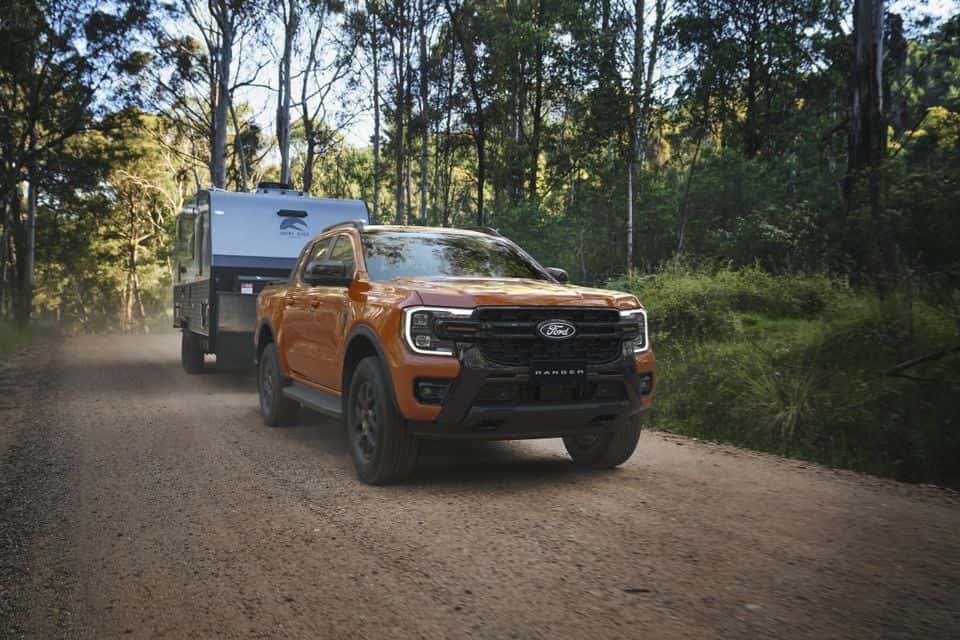
A properly equipped Ford Ranger delivers a maximum towing capacity of up to 7,500 pounds. That gives this midsize truck enough muscle to handle everything from a pair of jet skis to a 24-foot camper heading out to Lake Tenkiller.
However, that top rating isn’t universal across every trim on the lot. Your actual pulling limit shifts based on whether you choose the standard 2.3L EcoBoost or the twin-turbo 2.7L V6, pick rear-wheel drive or four-wheel drive, or select the specialized Ranger Raptor. Payload limits and factory equipment change the math, too.
Having the right factory setup makes all the difference before you drop a coupler onto the ball hitch. Below, we’ll break down the official ratings by engine, cab configuration, and package options so you know exactly what your truck can pull safely.
Quick Summary: When properly equipped with the factory trailer tow package, the Ford Ranger delivers a maximum towing capacity of up to 7,500 pounds and a payload capacity reaching over 1,800 pounds on select configurations. The off-road-dedicated Ranger Raptor features a specialized suspension that rates slightly lower at 5,510 pounds. Exact capacities depend on your chosen engine, drivetrain (4×2 vs. 4×4), and cab configuration, so always check your truck’s door-jamb safety compliance certification label before hitching up.
Key Takeaways
- Top-End Pulling Power: The Ford Ranger max towing capacity tops out at 7,500 pounds for standard models equipped with the factory tow setup, while the high-performance Ranger Raptor is rated to pull up to 5,510 pounds.
- Ratings Shift by Configuration: Your truck’s real-world rating depends on your specific build, varying noticeably across the 2.3L EcoBoost four-cylinder, the twin-turbo 2.7L EcoBoost V6, and whether you run a 4×2 or 4×4 drivetrain.
- The Factory Tow Package Is Essential: Hitting the headline 7,500-lb limit requires Ford’s factory trailer tow package, which adds vital hardware like a frame-mounted Class IV hitch receiver and a 4-pin/7-pin wiring harness.
- Towing and Payload Are Not the Same: While pulling capacity measures what you can drag behind the bumper, Ranger payload capacity covers the gear in the bed, aftermarket accessories, and the passengers in the cab including the tongue weight pushing down on your hitch.
- Your Door-Jamb Sticker Rules All: Published brochures list maximum theoretical capabilities, but the Federal Safety Compliance Certification and Tire/Loading labels inside your driver’s door jamb show the exact, binding weight ratings for your specific truck.
What Is the Ford Ranger’s Towing Capacity?
Equipped with the proper factory equipment, the Ford Ranger delivers a towing capacity of up to 7,500 pounds across most trim levels. If you step up to the trail-focused Ranger Raptor, that ceiling drops to 5,510 pounds to protect its long-travel, coil-spring off-road suspension. Across the rest of the lineup, the truck holds its ground as one of the most capable haulers in the midsize truck class.
Don’t assume every truck on the lot pulls that headline figure right out of the gate. Towing capacity isn’t a single, fixed metric stamped across the entire nameplate. Achieving the Ford Ranger max towing capacity demands the right combination of factory hardware, starting with the optional Class IV trailer hitch and auxiliary transmission cooler.
Your cab configuration and drivetrain choice tip the scale, too. A SuperCrew setup adds structural cabin weight compared to a SuperCab build, and opt-in four-wheel drive hardware trims a fraction off your available gross limits compared to a lighter rear-wheel-drive truck. Even your choice under the hood between the standard 2.3L EcoBoost four-cylinder and the available 2.7L EcoBoost V6 impacts curb weight and cooling dynamics under heavy throttle.
Before you back up to a trailer ball, match your truck’s specific build to the job. A missing factory tow package or an overloaded truck bed can drastically change what is safe to pull down highway pavement.
Ford Ranger Towing Capacity by Configuration
Seeing how cab layouts, motors, and drivelines match up side-by-side makes finding the right truck straightforward. Adding four-wheel-drive running gear or choosing a larger cabin slightly shifts curb weight, while skipping the factory hitch drastically reduces your pulling limits.
Here is how common build combinations compare when setting up your Ranger towing capacity for the job site or the campground:
| Cab Style | Drivetrain | Engine | Tow Package | Approx. Max Towing Capacity |
| SuperCab | 4×2 (RWD) | 2.3L EcoBoost I-4 | Yes (Class IV) | 7,500 lbs |
| SuperCab | 4×4 | 2.3L EcoBoost I-4 | Yes (Class IV) | 7,500 lbs |
| SuperCrew | 4×2 (RWD) | 2.3L EcoBoost I-4 | Yes (Class IV) | 7,500 lbs |
| SuperCrew | 4×4 | 2.3L EcoBoost I-4 | Yes (Class IV) | 7,500 lbs |
| SuperCrew | 4×4 | 2.7L EcoBoost V6 | Yes (Class IV) | 7,500 lbs |
| SuperCrew | 4×4 | 3.0L EcoBoost V6 (Raptor) | Standard | ~5,510 lbs |
| SuperCrew | 4×2 / 4×4 | 2.3L EcoBoost I-4 | No (Bumper Hitch Only) | ~3,500 lbs |
These figures represent typical configurations across modern model years, but exact ratings can fluctuate based on optional packages, tire sizes, and axle gear ratios. Always verify your specific truck’s factory numbers using Ford’s official build resources or by reading the Tire and Loading Information label pasted inside the driver’s side door jamb before hooking up.
Ford Ranger Payload Capacity: How It’s Different From Towing Capacity
Payload is the weight your truck carries directly over its own axles including passengers in the seats, tools in the bed, and aftermarket gear. Towing capacity measures what rolling weight the chassis can safely pull behind the bumper. Both ratings are strictly governed by your truck’s Gross Vehicle Weight Rating (GVWR), which caps the maximum total weight of the truck and everything sitting inside or on it.
Depending on the cab and drivetrain, a well-equipped Ranger payload capacity typically ranges between 1,400 and roughly 1,800 pounds. The common misstep truck buyers make is treating payload and towing as two isolated numbers. In reality, tongue weight the downward force the trailer coupler exerts on your hitch ball counts directly against your payload.
A standard trailer tongue weight runs 10% to 15% of total trailer weight. Drop a 6,000-pound camper onto your hitch, and you instantly place 600 to 900 pounds directly onto the truck’s rear suspension.
If your specific Ranger payload capacity is 1,600 pounds, that trailer tongue alone eats over half your allowance. Factor in three adult buddies, a loaded cooler, and bed gear, and you risk exceeding your truck’s legal rating long before reaching the 7,500-pound tow ceiling.
What Affects the Ford Ranger’s Towing Capacity?
Your truck’s true towing limit is shaped by a mix of powertrain specs, structural weight, and cooling capability working together. Altering just one piece of mechanical hardware or cab geometry changes what the chassis can pull safely down the highway.
- Engine Choice: The base 2.3L EcoBoost four-cylinder handles standard trailering with ease, while the twin-turbo 2.7L EcoBoost V6 provides extra torque for merging up steep grades under heavy loads.
- Drivetrain (4×2 vs. 4×4): Adding a front differential, transfer case, and extra half-shafts adds curb weight to 4×4 models, which trims usable payload and influences gross combination limits.
- Cab and Bed Configuration: A SuperCrew cab adds more sheet metal and passenger room than an extended SuperCab, directly shifting the curb weight balance.
- Axle Gear Ratio: Shorter rear-end gear sets turn engine torque into low-end mechanical leverage, making it easier to start rolling on boat ramps.
- Factory Tow Package: Skipping factory equipment restricts you to bumper-ball limits, leaving out the vital structural and electrical upgrades needed for heavy trailers.
Ordering the factory trailer tow package does far more than bolt a Class IV receiver under the bumper. It installs a beefier radiator and upgraded engine cooling to manage fluid temps on long summer pulls, integrates 4-pin and 7-pin wiring harnesses, and activates electronic trailer sway control within the truck’s stability system. Without those cooling and chassis defenses, pulling heavy loads risks overheating vital drivetrain components.
What Does the Ford Ranger Tow Package Include?
The factory trailer tow package outfits the truck with the essential hardware needed to pull serious loads safely. At its core, the package includes a heavy-duty, frame-mounted Class IV hitch receiver, a dual 4-pin and 7-pin electrical wiring harness, and upgraded engine and transmission cooling to shed excess thermal heat under sustained throttle.
Opting for the factory Ranger tow package is often the single most critical upgrade for unlocking the truck’s full capabilities. Without this dedicated setup, a standard Ranger is typically restricted to basic bumper-pull limits of roughly 3,500 pounds. Adding the factory hardware bumps that ceiling all the way to the maximum 7,500-pound rating.
Depending on the trim tier and tech packages selected, modern builds also incorporate an integrated trailer brake controller right into the dashboard, eliminating clunky aftermarket units. Higher trims can add smart trailering tech, like Ford’s Pro Trailer Backup Assist and blind-spot coverage calibrated to extend down the entire length of your trailer.
Before driving off the lot, double-check the window sticker to confirm the factory Ranger tow package is installed. Bolting on an aftermarket hitch later provides a mounting point, but it won’t add the factory cooling systems or the stability software calibrations tuned specifically for heavy hauling.
How to Find Your Ranger’s Exact Towing Capacity
Online spec sheets offer helpful benchmarks, but confirming the legal limits for your specific truck takes three quick steps:
- Check the Driver’s Door-Jamb Labels: Open the driver’s door and locate the Federal Safety Compliance Certification and Tire/Loading labels. They stamp your exact Gross Vehicle Weight Rating (GVWR), Gross Axle Weight Ratings (GAWR), and the maximum payload capacity calculated for your specific build as it rolled off the assembly line.
- Consult Ford’s Official Towing Guides and Charts: Cross-reference your cab style, engine, axle ratio, and Gross Combined Weight Rating (GCWR) against the model-year Ford RV & Trailer Towing Guide or the towing section of your digital owner’s manual.
- Have a Dealership Pull the Build Sheet via VIN: Stop by a showroom or ring the service department with your 17-digit Vehicle Identification Number (VIN). A specialist can bring up the exact factory window sticker and confirm whether your truck was equipped with the heavy-duty tow package from the plant.
Tips for Towing Safely With Your Ford Ranger
Pulling a heavy load safely down the highway requires more than just locking the coupler onto the ball. Keep these practical rules in mind as part of your regular Ranger towing guide routine:
- Watch the GCWR, Not Just Trailer Weight: Never exceed your Gross Combined Weight Rating, which caps the total combined weight of the truck, trailer, occupants, fuel, and all cargo.
- Dial In Your Tongue Weight: Keep tongue weight strictly between 10% and 15% of the total loaded trailer weight. Too little creates dangerous high-speed trailer sway; too much overloads the rear axle and lifts the front tires.
- Match the Ball Mount and Hitch Class: Ensure your drop hitch, shank, and ball are rated to match or exceed the weight of your trailer. Never pair a 7,000-pound camper with a light-duty ball mount.
- Air Up to Cold-Load Pressures: Inflate truck and trailer tires to the maximum cold PSI indicated on their respective sidewalls or loading placards to avoid excessive sidewall heat buildup.
- Set Up Electric Trailer Brakes: Most states require independent trailer brakes on loads topping 3,000 to 4,000 pounds. Make sure your integrated trailer brake controller is calibrated with the correct gain before pulling out into traffic.
- Run a Quick Pre-Tow Inspection: Double-check your hitch pin, safety chains (crossed under the tongue), breakaway cable, and trailer turn signals before taking off on long hauls down US-69.
Upgrade Your Truck with Genuine Ford Towing Accessories
Getting ready to haul heavy equipment or a new camper often requires more than just standard factory gear. Equipping your truck with genuine Ford OEM parts ensures every component matches your vehicle’s factory engineering, wiring schematics, and safety compliance standards.
Our parts department stocks and orders factory-backed equipment designed specifically for your Ranger, including:
- Class IV Hitch Receivers & Drop Hitches: Precision-measured ball mounts and shank assemblies engineered to maintain proper trailer level and weight distribution.
- Integrated Trailer Brake Controllers: Factory in-dash modules that wire cleanly into the truck’s computer system without dangling aftermarket wires.
- 7-Pin & 4-Pin Wiring Adapters: Direct plug-and-play harnesses and replacement connectors that keep trailer lighting and auxiliary power reliable.
- Bed Cleats & Heavy-Duty Tie-Downs: Extra anchor points to secure shifting payloads, generators, and toolboxes over rough Oklahoma roads.
Whether you need a specific ball mount drop, trailer towing mirrors, or heavy-duty tie-down hardware, our parts specialists can verify exact fitment using your VIN. Stop by the parts counter at James Hodge Ford or contact our team to order your accessories before hitting the highway.
Which Ford Ranger Configuration Should You Choose for Towing?
Matching the truck to what sits on your trailer hitch prevents expensive surprises down the road. Instead of guessing, line up your trailer’s loaded weight against the right engine, drivetrain, and equipment combination:
Light Utility Trailers & Personal Watercraft (Under 3,500 lbs)
- Recommended Build: SuperCab or SuperCrew, 2.3L EcoBoost I-4, 4×2 or 4×4.
- The Verdict: Standard power handles weekend lawn gear or personal watercraft easily. A factory hitch is convenient, but lighter loads don’t strictly demand the heavy-duty cooling upgrades.
Bass Boats, Small Campers & Loaded Utility Hauls (3,500 to 5,500 lbs)
- Recommended Build: SuperCrew, 2.3L EcoBoost I-4 or 2.7L EcoBoost V6, 4×4, Factory Trailer Tow Package.
- The Verdict: Ideal for frequent weekend trips out to Fort Gibson Lake. The factory tow package is mandatory here for integrated cooling, while 4×4 provides vital traction on slick boat ramps.
Full-Size Travel Trailers & Heavy Equipment (5,500 to 7,500 lbs)
- Recommended Build: SuperCrew, 2.7L EcoBoost V6, 4×4, Factory Trailer Tow Package, Integrated Trailer Brake Controller.
- The Verdict: Approaching the truck’s upper threshold requires maximum low-end torque for highway merging, a weight-distributing hitch setup, and strict attention to payload limits.
If you are not sure where your setup lands once fuel, passengers, and gear are packed, visit James Hodge Ford. Our sales team can run the numbers on your specific trailer weight, planned routes, and cargo needs to match you with the exact build configuration ready for the task.
What Most Truck Buyers Miss About Towing Specs
Around our showroom, the most common conversation starts right after a customer buys a new boat or travel trailer. They walk in knowing their trailer’s dry weight is 5,200 pounds, so they figure any truck rated for 7,500 pounds will handle it with ease.
That is usually where we pull out a notepad and look a little deeper.
Dry weight never includes fresh water, full propane tanks, camping gear, or groceries. More importantly, folks often forget about tongue weight eating into their truck’s usable payload, or how four adult passengers and tools in the bed cut into the Gross Combined Weight Rating (GCWR). We love walking out to the lot with our customers, swinging open the driver’s door, and pointing out the exact figures on the tire and loading certification stickers together.
If you are eyeing a specific truck on our lot or want to double-check what your current ride can legally handle, bring us your 17-digit VIN. Our sales and service teams can pull the original factory build sheet in seconds to verify gear ratios, auxiliary cooling equipment, and whether the truck left the plant with a true Class IV tow package. We can also help you set up weight-distribution hitches, wire in brake controllers, and pick the right ball mounts for your rig.
Ready to Hitch Up with Confidence?
Getting the right truck comes down to matching your gear with real-world ratings, not guesswork. With a maximum pulling capacity of up to 7,500 pounds and versatile EcoBoost power, the Ford Ranger easily handles everything from weekend fishing trips on the reservoir to heavy utility work. Just remember that the numbers on paper only tell half the story: your cab style, drivetrain, factory tow package, and cargo payload all dictate how safely your rig performs once that trailer is locked onto the ball hitch.
Whether you are preparing for your next camping trip or comparing new builds on the lot, our team is ready to walk you through the math and verify every specification down to the pound. Give the sales team at James Hodge Ford a call today at 918-608-8987 or stop by our showroom to confirm exact towing specs for your setup and drive home the perfect configuration.
Frequently Asked Questions
What is the maximum towing capacity of a Ford Ranger?
The maximum towing capacity of a Ford Ranger is 7,500 pounds when properly equipped with the factory Class IV trailer tow package. Without that package, standard models are generally limited to basic bumper-pull ratings around 3,500 pounds, while the off-road-focused Ranger Raptor tops out at 5,510 pounds.
Does the Ford Ranger’s towing capacity change with 4WD vs 2WD?
Yes, choosing four-wheel drive slightly reduces your truck’s available payload and can impact gross weight calculations due to the added weight of the transfer case and front axle. However, with the factory tow package installed, both 4×2 and 4×4 configurations maintain the same official 7,500-pound maximum tow rating under Ford’s chassis standards.
What’s included in the Ford Ranger tow package?
The factory Ford Ranger tow package includes a frame-mounted Class IV hitch receiver, a dual 4-pin and 7-pin electrical wiring harness, and an upgraded engine cooling system. Depending on the model year and trim level, it may also integrate trailer sway control calibrations and an in-dash electronic trailer brake controller.
How do I find the exact towing capacity for my specific Ranger?
You can find your specific truck’s exact ratings by reading the Federal Safety Compliance Certification and Tire/Loading labels posted inside the driver’s side door jamb. For an exact tow rating based on your axle ratio and options, cross-reference your Gross Combined Weight Rating (GCWR) in Ford’s towing guide or have our dealership pull your build sheet via VIN.
What’s the difference between towing capacity and payload capacity?
Towing capacity is the maximum rolling weight your truck can pull behind its hitch, while payload capacity is the weight your truck can carry directly inside the cab and bed. Trailer tongue weight presses directly down onto your hitch ball, meaning it counts toward your payload allowance rather than your tow limit.
Can a Ford Ranger tow a travel trailer?
Yes, a properly equipped Ford Ranger can easily pull most single-axle and lightweight dual-axle travel trailers weighing between 3,000 and 6,000 pounds fully loaded. Always calculate the trailer’s wet, loaded weight along with passenger and bed cargo rather than relying solely on the manufacturer’s dry-weight brochure figure.
Does cab size (SuperCab vs SuperCrew) affect towing capacity?
Cab size affects the truck’s overall curb weight and payload rating, but properly equipped models in both cab styles share the top-tier 7,500-pound pulling limit. Because a SuperCrew carries more interior volume and sheet metal, it offers slightly lower payload numbers than a comparable SuperCab, leaving less margin for tongue weight.
Do I need a weight-distribution hitch for my Ranger?
Yes, Ford recommends using a weight-distribution hitch whenever you pull a trailer weighing more than 5,000 pounds with a conventional ball mount. A weight-distributing setup levels out your truck’s stance, shifts tongue weight forward to the steering axle, and significantly reduces highway sway on heavy loads.

0 comment(s) so far on Real-World Ford Ranger Towing Capacity: What Can It Actually Pull?